Thinking about Beverly Hills but unsure whether the Flats or the Hills fit your life and investment goals? You are not alone. Each area offers a distinct lifestyle, ownership experience, and resale path, and the differences matter when you are buying or selling a high-value estate. In this guide, you will learn what sets the Flats and the Hills apart on location, usability, permitting, risk, and market behavior so you can move forward with confidence. Let’s dive in.
Quick comparison
| Factor | Flats | Hills |
|---|---|---|
| Lifestyle | Walkable to shopping, dining, parks | Privacy, views, estate feel |
| Access | Easier parking, deliveries, daily logistics | Steeper driveways, more stairs, longer access routes |
| Architecture | Historic 1920s–1940s homes, many remodels | Mid-century Modern and contemporary estates |
| Lot & buildability | Uniform parcels, simpler additions and ADUs | Larger lots, terraces, retaining walls, added complexity |
| Risk & maintenance | Older systems, sewer laterals, slab foundations | Slope stability, drainage, potential wildfire exposure |
| Market dynamics | Broader buyer pool, consistent turnover | Higher-end, lower volume, more off-market activity |
| Permitting | Straightforward in many cases | Geotechnical reports, hillside rules, more reviews |
| Services | Typically City of Beverly Hills | May be City of Beverly Hills or City of Los Angeles, verify by parcel |
Location and jurisdiction
“Flats” generally describes the lower-elevation neighborhoods near Wilshire, Santa Monica Boulevard, Rodeo Drive, and Beverly Gardens. “Hills” includes the upper-elevation areas in Beverly Hills and the Beverly Hills Post Office area known as BHPO. Some addresses within 90210 fall under the City of Los Angeles rather than the City of Beverly Hills.
Jurisdiction affects policing, trash and other municipal services, and permitting rules for remodels or additions. It can also affect school assignments. Always verify the specific parcel’s city and services before you write an offer or plan work.
Lifestyle and daily living
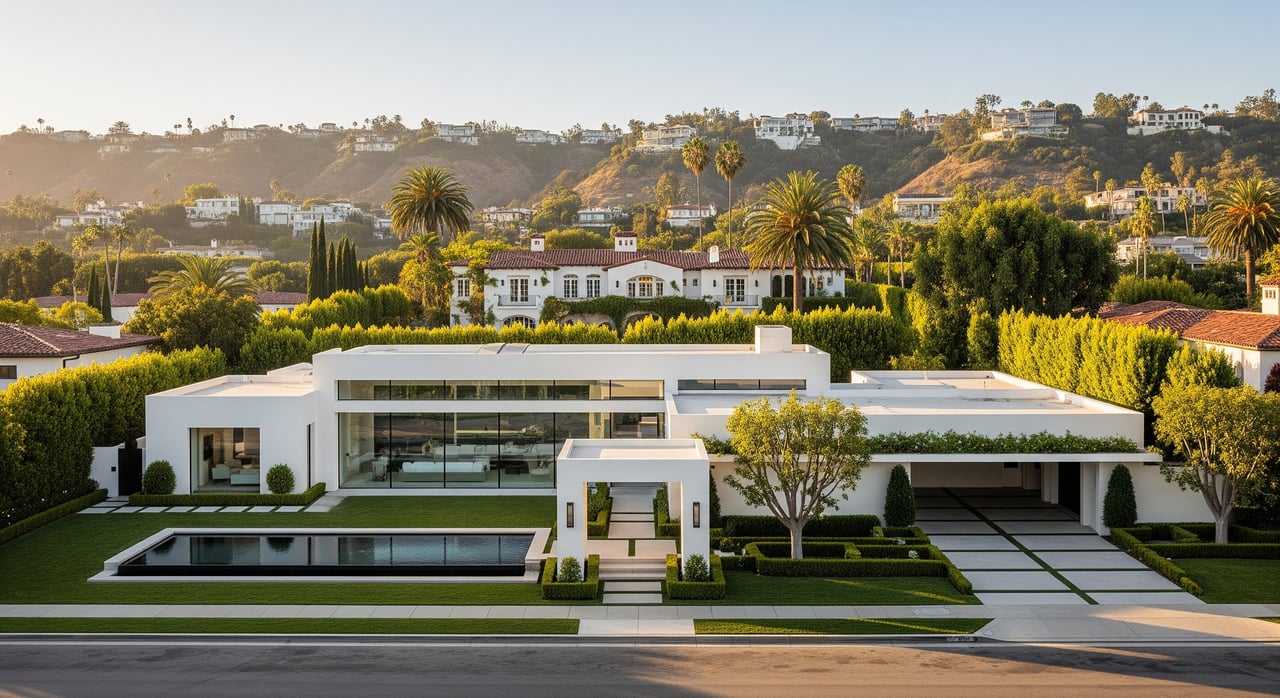
If you value walkability and quick access to restaurants, retail, and parks, the Flats deliver daily convenience. Streets are generally level, which makes parking, deliveries, and moving furniture simpler. For many, that ease translates into a better day-to-day rhythm.
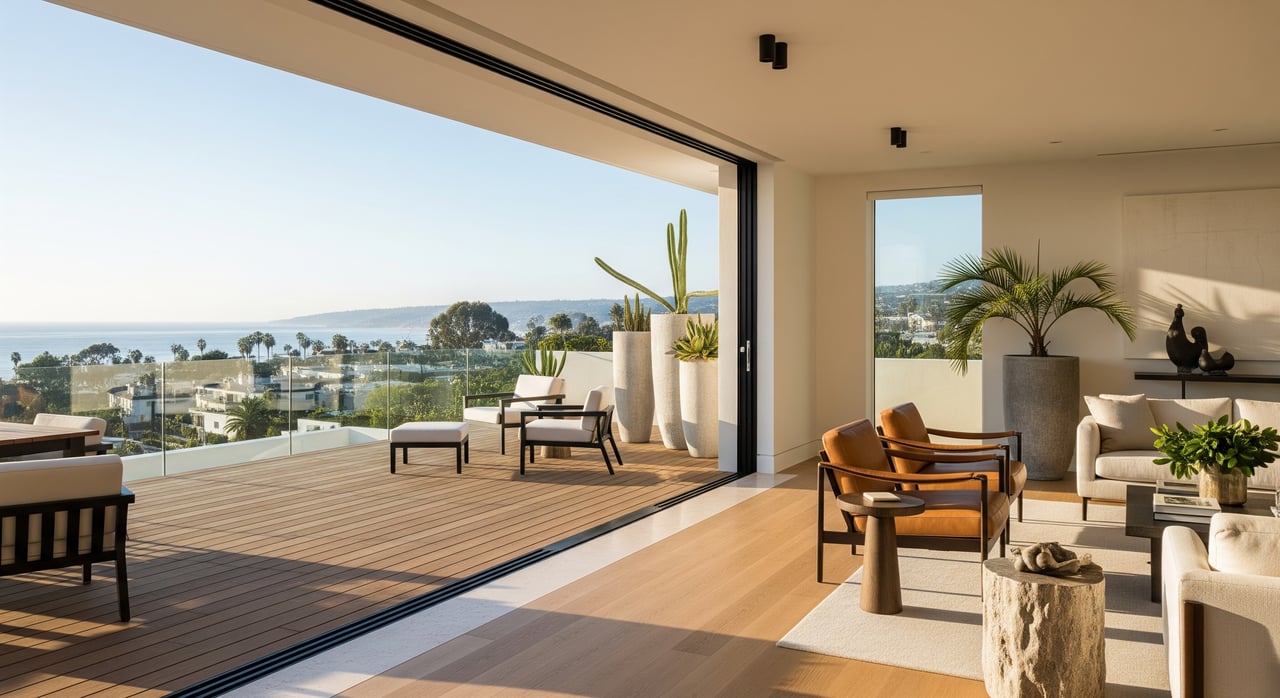
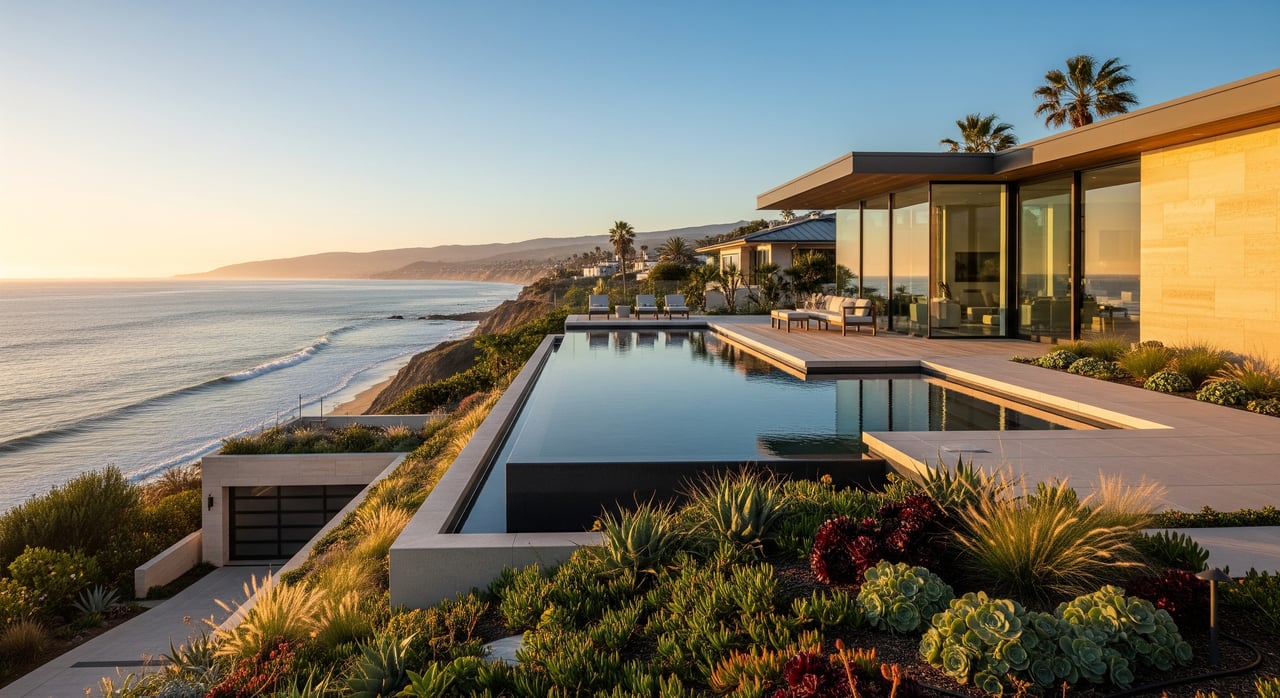
If privacy and views define your vision, the Hills stand out. Gated driveways, greater separation from neighbors, and skyline or canyon vistas create a retreat-like setting. The tradeoff is logistics, since steep driveways, stairs, and multi-level access can make daily routines more complex.
Architecture and lot type
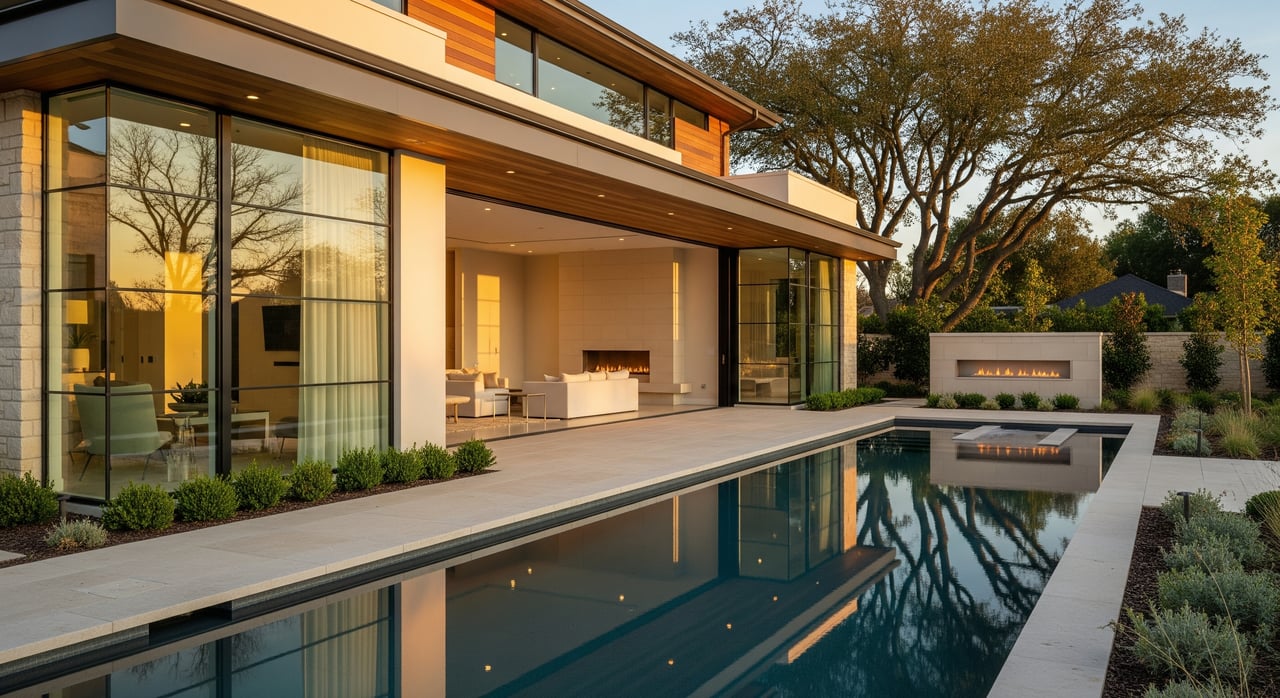
The Flats feature a significant stock of historic Spanish Colonial, Tudor, and Mediterranean homes from the 1920s to 1940s, with many thoughtful remodels and restorations. Parcels are typically more uniform, so additions and ADUs are often simpler and less costly per square foot to execute.
The Hills tend to showcase Mid-century Modern and new contemporary estates on larger, terraced lots. You may have more total buildable area, yet grading, retaining walls, and slope constraints add complexity and cost. View value is real, but view corridors and setbacks can shape what you can build.
Market behavior and liquidity
Hillside estates often command a premium for privacy, views, and acreage. Sales volume at the very high end is lower, and off-market or pocket listings are more common. Marketing is more targeted, and appraisal comparables may be limited for unique properties.
The Flats attract a broader buyer pool, from families to professionals and downsizers who prioritize access and everyday usability. Turnover tends to be steadier, and listings can be more liquid due to wider demand.
Maintenance, risk, and insurance
On the Hills, plan for ongoing attention to slope stability, retaining walls, and drainage systems. Terraced landscaping and complex driveways add maintenance. Some areas also carry elevated wildfire exposure, which can influence insurance underwriting and premiums.
In the Flats, the topography reduces slope-related risk, but older homes may have foundation, plumbing, or sewer-lateral issues. Tree roots can impact lines, and under-slab repairs are not unusual in vintage properties. Earthquake risk spans the entire region, so seismic considerations apply in both areas.
Permits and inspections
Hillside ownership usually means more specialized due diligence. Expect geotechnical and structural reviews to evaluate slope movement, retaining walls, and drainage. Design or grading work can trigger hillside-specific ordinances and discretionary review. Plan early and budget time for reports and permits.
Flats ownership still requires careful inspection, with emphasis on foundations, roofs, termite and pest, and especially sewer laterals and stormwater systems in older neighborhoods. Renovations or ADUs are typically more straightforward on level lots, though you still must verify local zoning and any historic or conservation guidelines.
What to inspect before you commit
Hills priorities
- Geotechnical report for slope stability, retaining walls, and drainage.
- Structural review for foundations, tie-backs, and any visible settlement.
- Drainage performance, including downspout routing and erosion control.
- Fire defensible measures, fuel clearance, and emergency access.
- Utility capacity, water pressure, and the condition of longer service lines.
Flats priorities
- Foundation and slab condition, including settlement and cracking.
- Sewer lateral and stormwater drainage, with scoping where appropriate.
- Termite and pest inspection, common in older structures.
- Roof systems and pools on older estates, plus maintenance records.
- Any design guidelines or restrictions for historic properties.
Schools and local services
School district boundaries and municipal services depend on the parcel’s jurisdiction. The City of Beverly Hills is served by Beverly Hills Unified School District. Some BHPO parcels may fall under different school assignments or city services. Always confirm by address before relying on any assumption.
Insurance and financing considerations
Hillside locations can face higher insurance scrutiny due to slope and, in some areas, wildfire exposure. Lenders may require additional reports, and premiums can vary. For unique hillside estates, appraisal comparables may be limited, which can affect loan processes and timelines.
Flats properties are not exempt from risk. Earthquake exposure is regionwide, and aging infrastructure can influence insurance and repair budgeting. Obtaining insurance quotes early helps you compare total carrying costs across properties.
Resale strategy and timing
For Hills sellers, documentation is a key advantage. Up-to-date geotechnical, structural, drainage, and landscaping records help buyers understand the engineering and care behind the property. Marketing often leans into privacy, views, garden design, and resort-level outdoor spaces.
For Flats sellers, highlight walkability, proximity to shopping and parks, municipal services, and thoughtful updates that balance historic character with modern systems. Maintenance logs, sewer-lateral reports, and recent upgrades can reduce buyer hesitation and speed negotiations.
Who each option fits
The Hills typically fit buyers who want seclusion, gated living, larger lots, and skyline or canyon views, and who are comfortable with specialized maintenance and permitting. High-net-worth collectors of unique estates often gravitate here for the drama and privacy.
The Flats align with buyers who want everyday convenience, simpler site conditions, and easy access to retail and parks. Families and busy professionals often prefer this setting, especially when walkability and daily logistics are top priorities.
Decision checklist
- Verify the property’s exact municipal jurisdiction, City of Beverly Hills or City of Los Angeles for BHPO.
- For Hills, obtain a recent geotechnical report, or make it a contingency.
- Confirm permits and final approvals for grading, retaining walls, pools, and major site work.
- Secure current insurance quotes to understand premium differences by location.
- Visit at different times of day to gauge noise, traffic, and privacy.
- Assess daily logistics, including driveway slope, parking, deliveries, and emergency egress.
- If schools matter to you, confirm enrollment by address in advance.
- Sellers, consider pre-listing inspections to streamline due diligence.
Two common buyer scenarios
You want a car-light lifestyle with quick access to Rodeo Drive and Beverly Gardens Park. The Flats may suit you, since level streets and nearby amenities simplify daily routines. Renovations or an ADU could be more straightforward if you plan to update or expand.
You are building a private retreat with skyline views and a gated approach. The Hills can deliver that experience on a larger lot. Budget for geotechnical work, drainage, and specialized landscaping to protect the setting and support long-term value.
How to choose with confidence
Your choice between Flats and Hills depends on how you live, how you plan to use the property, and how you think about risk, maintenance, and resale. Clarify those priorities, then evaluate specific parcels for jurisdiction, site engineering, and logistics. With the right preparation, both areas offer exceptional Beverly Hills ownership experiences.
When you are ready to compare opportunities or plan a sale, work with an advisor who blends discreet, concierge-level service with an investor’s eye for value. For boutique guidance across Beverly Hills, BHPO, and the Los Angeles Westside, connect with Carter Andrews to align your next move with your goals.
FAQs
Are Beverly Hills Flats more walkable for daily needs?
- Yes, the Flats typically offer level streets and close proximity to shopping, dining, and parks, which makes errands and routines simpler.
What should I know about BHPO and jurisdictions?
- Some 90210 addresses fall within the City of Los Angeles rather than the City of Beverly Hills, which affects services, policing, schools, and permitting, so verify by parcel.
How do hillside inspections differ from flat-lot inspections?
- Hillside homes usually require geotechnical and structural reviews, drainage and erosion assessments, and sometimes wildfire defensible planning, while flat lots emphasize foundations, sewer laterals, and older systems.
Do Hills homes cost more to maintain over time?
- They often do, since retaining walls, slope drainage, terraced landscaping, and complex driveways require ongoing care that can be more intensive than flat-lot maintenance.
Will it be harder to resell a property in the Hills?
- Resale is achievable, but the buyer pool can be narrower and timelines longer for unique estates, so strong engineering documentation and targeted marketing help.